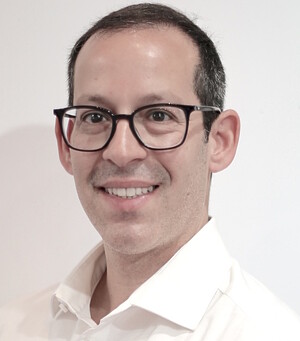
Tutor: Mr. Nikolaos Schetakis
💼 PhD candidate
🏛 ️ School of Production Engineering and Management, Technical University of Crete (GR)
✉ nischetakis<at>tuc.gr
💼 CEO
🏛 Quantum Innovation IKE (GR)
💼 Head of R&D
🏛 Alma Sistemi Srl (IT)
Short CV
Quantum physicist and Quantum Machine Learning (QML) specialist combining 7+ years of industry R&D leadership with academic research. Focused on hybrid classical–quantum models, QML toolchains (QML Arena platform), intelligent remote sensing, and scalable quantum-enhanced AI for aerospace, defence and environmental applications.
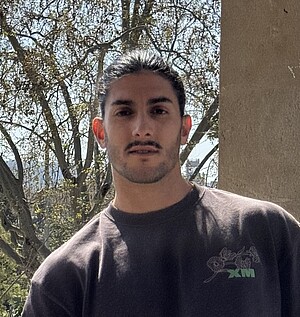
Tutor: Mr. Napoleon Papoutsakis
💼 Senior Software Engineer
🏛 Quantum Innovation IKE (GR)
💼 AI Consultant
🏛 Alma Sistemi Srl (IT)
✉ npa<at>alma-sistemi.com
Short CV
Senior Software Engineer with a Master of Engineering in Electrical and Computer Engineering, specialized in electronic and computer systems design. Brings 4+ years of experience in machine learning across diverse domains, including Quantum Machine Learning (QML) and QML toolchains, alongside strong expertise in web and mobile application development. Actively contributes to 3 European Horizon and 1 defence-related projects, focusing on the development of scalable, intelligent, and data-driven solutions.
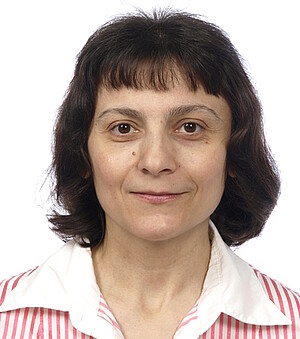
Tutor: Dr. Aliki D. Muratidou
🏛 ️School of Production Engineering and Management, Technical University of Crete (GR)
✉ amouratidou<at>tuc.gr
Short CV
Dr. Aliki D. Mouratidou (Muradova) is a Senior Research Scientist at the Institute of Computational Mechanics and Optimization, Technical University of Crete, and an Adjunct Professor at the Hellenic Mediterranean University. She holds a PhD in Applied Mathematics (TSU, 1999) and a BSc (Hons) in Applied Mathematics and Cybernetics (TSU, 1990). Her expertise spans computational mechanics, high‑ order numerical/semi‑ analytical methods, time integration, spectral methods for plate bending, bifurcation, scientific programming, computational intelligence(fuzzy/neuro‑ fuzzy control), and physics‑ informed (and quantum enhanced physics-informed) neural networks for elasticity and multiphysics with HPC. She has held research and teaching posts at TSU’s Vekua Institute, the University of Ioannina, the Australian National University, and the Technical University of Crete, and earlier served as an engineer‑ mathematician at Georgia’s Ministry of Education. She has authored a book, published extensively in journals and conferences, and serves on editorial boards and as a reviewer for international journals.
Tutorial Description
This tutorial introduces Quantum Machine Learning (QML) through a concise blend of foundations, advanced concepts, and hands-on practice using the QML Arena platform. It begins with "Quantum AI Fundamentals" — a lecture covering quantum computing principles, variational circuits, and data re-upload techniques. The second module,"QML Concepts & Architectures" examines hybrid classical–quantum architectures, benchmarking methodology, and practical QML applications. The third module “Quantum-Enhanced Physics-Informed Neural Networks” presents a hybrid quantum–classical physics-informed neural network (PINN) that embeds quantum neural layers into a classical PINN to accelerate numerical solutions of differential equations applied in mechanics. The final two modules is a guided "Hands-on QML Arena Workshop" where participants build hybrid neural networks, run experiments on built-in and user datasets, and compare quantum-enhanced models to classical baselines using the platform’s visualization and diagnostic tools.
Participants will leave with a clear understanding of QML theory, practical experience constructing and evaluating hybrid models, and reproducible workflows for benchmarking QML vs classical approaches. The tutorial emphasizes best practices (data preprocessing, train/validation/test protocols, and consistency checks) and demonstrates how the QML Arena’s interactive features and AI-powered guidance accelerate learning and ensure transparent, educational comparisons. Ideal for researchers, PhD students, and practitioners seeking to evaluate and adopt QML techniques.
Outline
- Quantum AI Fundamentals (40 min) — Lecture: "Overview & Foundations of Quantum Artificial Intelligence" (Nikolaos Schetakis)
- QML Concepts & Architectures (30 min) — "Variational Circuits, Data Re-upload, and Hybrid Neural Networks" (Nikolaos Schetakis)
- Quantum-Enhanced Physics-Informed Neural Networks (30mins) (Aliki D. Mouratidou)
- Hands on QML Arena Workshop Part I (30 min) — "Data & Preprocessing; Building Models in QML Arena" (live demo – Napoleon Papoutsakis)
- Hands on QML Arena Workshop Part II (50 min) — "Training Hybrid Models, Visual Diagnostics, and Benchmarking vs Classical Nets" (guided participant exercises) (Nikolaos Schetakis , Napoleon Papoutsakis)
Intended Audience & Prerequisites
Intended audience
- Researchers, PhD students, and industry practitioners interested in exploring Quantum Machine Learning (QML), hybrid classical–quantum architectures, and practical benchmarking.
- Suitable for attendees with ML experience who want hands‑on practice with QML tools and to evaluate quantum enhancements on real problems.
- For the hands-on session we can provision ~20 software licenses; attendees are encouraged to work in teams of 2–4 to maximize participation and troubleshooting.
Prerequisites
- Bring your own laptop (required). Wi-Fi recommended; bring power adapter.
- Basic understanding of neural networks (feedforward, training, loss, optimizer) and common ML workflows.
- No prior quantum computing experience required
Duration
150 mins presentations + 20mins Q&A + 10mins brake.